







Kurt Hummeldorf, DMD-PC

Are You a Good Candidate for Dental Implants?

It’s estimated that 125 million Americans are missing at least one tooth. If you are one of them, you may be considering dental implants for tooth replacement. We think it’s important for you to know what factors make a person a good candidate for such a procedure. Here are a few things to consider.

Most People Are Good Candidates

Are You a Good Candidate for Dental Implants

Dental implants can replace one, several, or all of your teeth. They can be used in place of bridges or dentures. Good candidates have healthy gums and are old enough so that their jawbone has stopped growing. You should also have enough bone to support and anchor the implants.

Even if you have lost bone in your jaw, however, you may still be a good candidate for implants. In fact, dental implants may be recommended to prevent further bone loss. In these situations, bone can actually be rebuilt with grafting procedures as part of the implant process.

Evaluation

Successful implantation starts with a thorough evaluation of your jaw, teeth, mouth, and overall health. You will receive a mouth X-ray and possibly a Computed Tomography (CT) scan. This will help us identify areas of bone loss and carefully see the shape of your sinuses and nerve location to make accurate assessments for your treatment. We will also do a thorough medical evaluation, as your overall health and history play a big role in how well your implant will heal and fuse to the bone.

People At Risk of Poor Outcomes

Uncontrolled diabetes, cancer, radiation to the jaws, smoking, alcoholism, or uncontrolled gum disease are all risk factors that can adversely affect your outcome. You may still be a good candidate with one of these diseases, but we’ll want to thoroughly assess your situation and work with you and your doctor to increase your overall health and functioning.

People who take certain medications, such as steroids or drugs that suppress the immune system, may not be suitable candidates, either. And people with certain habits, such as people who severely grind or clench their teeth, may put too much pressure on the implants, causing long-term damage.

Overall, dental implants have a very high rate of success and patients tell us how happy they are with the outcome. If you are considering implants, we can complete a careful examination to determine what options are best suited for you. Call us today to make that appointment!
Are You in Need of Exceptional Oral Surgery?

If you're in need of restorative dental treatments, Dr. Hummeldorf and their team have the expertise to provide these services with the highest level of care.
Call Us Today!

Osseointegration: Big Word, Simple Concept!

Was this word the invention of an evil doctor who loves long and complicated words? No! Osseointegration actually derives from the Greek osteon, bone and the Latin integrare, to make whole. It’s a physical process that was first observed by Swedish researchers in the 1960’s and refers to the functional connection between a titanium implant and living bone. Simply put, without osseointegration, dental implants wouldn’t work!

Osseointegration is a natural process: When the tiosseointegrationtanium dental implant connects to bone cells, it is locked into the jawbone, forming a solid bond. While the process is natural, the implementation isn’t simple. Implant healing times and initial stability depend on implant characteristics and to a large extent on your doctor! We have ample experience in placing dental implants and therefore can ensure that you receive the best care and outcome when it comes to implant surgery and the healing process.

The first evidence of the bone bonding with the implant occurs after a few weeks, while a more robust connection progresses over the next months or years. The osseointegration process will make the implant resistant to external shocks over time, but it can still be damaged from trauma or poor care.

The benefits of dental implants can’t be overstated! Not only do they give you a fully functioning bite back, they also prevent your jawbone from deteriorating and protect your facial profile.

Give us a call if you have questions about the dental implant process!


Oral Cancer Self-Screening: Why Everybody’s Doing It (Or Should Be)


Oral cancer has a bad reputation for being more deadly than some other forms of cancer that you hear of more commonly. We are here to tell you that it doesn’t have to be that way. Oral cancer goes unnoticed, not because it is difficult to see or feel, but because the idea of regular oral cancer screenings (either at home or in our office) is rather new. It simply has not been on the public health radar until now.

That is why we want to get the word out, and we need your help! Examining the neck, throat and oral cavity is a relatively simple task when compared to other parts of the body such as internal organs. Early diagnosis leads to better prognosis!

We recommend that once a month, you give yourself the following exam. It should only take 2-3 minutes and could save your life, or the life of a loved one!

Oral-Cancer-Self-ScreeningFirst, a word about the ever-changing mouth: We know that many patients avoid self-exams because the mouth is one area of the body that has constant change going on. For example, you may have a recent burn, bite or cold sore and probably don’t want to bother us every time you notice these things! That is why we offer this rule of thumb: any suspicious area that is not better after 14 days should be brought to our attention.

How to perform an Oral Cancer Self Exam:

  1. Use a mirror and a bright light.
  2. Remove dentures.
  3. Look and feel lips and front of gums. Grasp lips with your thumb and forefinger and feel for lumps.
  4. Tilt your head back and inspect the roof of your mouth
  5. Pull your cheek out to see the inside surface and gums in the rear.
  6. Pull out your tongue and look at all surfaces.
  7. Feel your neck and under the lower jaw for enlarged lymph nodes, swelling or lumps.

What are you looking for?

  1. White patches
  2. Red Patches
  3. Combination of red and white patches
  4. Sores
  5. Abnormal lumps or thickening
  6. Chronic sore throat/hoarseness
  7. Difficulty chewing/swallowing
  8. Masses or lumps in the neck

Weighing the Costs of Dental Implants


When compared to the costs of other tooth replacement options, boy do dental implants seem expensive! Yet you may be surprised to learn that, in the long run, dental implants can be more affordable than their traditional counterparts. Understanding this procedure and the factors that determine the costs can help you decide if dental implants are a good investment for you!

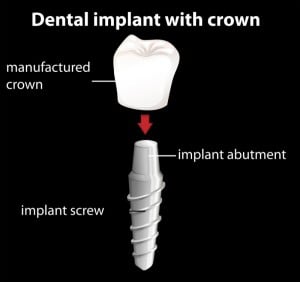
What is a Dental Implant? A dental implant is a permanent replacement for lost teeth. It is made of an artificial tooth firmly held in place by a tooth root made of titanium (which is biocompatible) that is surgically placed into your jaw. Dental implants help stabilize the jaw and the bone around it to avoid future bone loss and maintain the shape of your jaw. They never have to be removed and feel more natural and comfortable than dentures. And unlike bridges or crowns, which are cemented in, the chances of slippage or shifting are eliminated. With implants, talking and eating become worry free.Weighing costs of Dental Implants

Steps In a Dental Implant Procedure. We will first use extensive imaging to determine bone health, height, and thickness to assess your bone and teeth structure carefully. The surgery itself is done in our office in separate stages. First, the implant is surgically placed into your jawbone, completely hidden within your gum tissue. Once the implant has integrated into your bone, a healing process of about 4 to 6 months, the next stage is the placement of the abutment, or the post that penetrates the gum and will connect the replacement tooth to the implant. The final stage involves attaching your artificial tooth (made from impressions of your natural tooth) to the abutment. If more than one tooth is being replaced, a removable bridge is used, as it is more affordable than implanting each tooth separately. For a bridge, it takes only one implant on either side to span an area holding several teeth. The bridge snaps into place for a more permanent and natural fit than dentures.

Factors That Affect the Cost. While dental implant surgery is a safe and routine option, it is a complex procedure that takes time and expertise to be done effectively. There are many factors that will influence the final costs including what X-ray and CT scans are necessary to evaluate and assess the implant area and the brand and material of the post, abutment and artificial teeth. However, the biggest cost factor is the complexity of the surgery itself. For example, how many teeth are we replacing and what is the location? Will additional procedures, such as bone grafting or sinus elevation be required? We do our best to make sure that your estimate includes all of the possible costs of each of the steps of your procedure.

While dental implants may seem expensive, they are often more affordable in the long run than traditional restoration methods such as crowns and bridges, which are more vulnerable to damage and usually require repairs or replacement every few years.

Dental implants are known to have a 95% success rate when completed by professionals with the right experience and training, such as us! Because dental implants offer a permanent solution, are natural and comfortable, and require little maintenance, they are a cost effective choice for most of our patients.


Our New Blog!

Our new blog has recently been set up! Check back for updates!